Choosing safe educational toys from China requires more than checking a colorful package or a factory brochure. Buyers must ask, “what certifications should educational toys have” for the target market, age group, and product design. A wooden shape sorter, a battery-powered learning tablet, and a magnetic building set may face different testing requirements. Small parts, accessible magnets, button batteries, paint coatings, and sound levels all require careful attention.
For the Chinese market, suppliers may need to meet applicable China Compulsory Certification requirements and national toy safety standards. However, not every educational toy automatically requires the same CCC pathway. Export products may need EN 71 testing for the European Union, ASTM F963 compliance for the United States, or other local requirements. CE marking is a declaration of conformity, not a universal safety certificate. Reliable suppliers should provide recent test reports, technical files, material information, and traceable production records.
Look closely at the details. Ask for reports matching the exact model, factory, materials, and age grade. A report for a similar puzzle is not enough. Check whether laboratories are competent and recognized in the relevant market. Review warnings, instructions, packaging, and batch information as carefully as the test results. Certifications reduce risk, but they do not replace factory audits or sample inspections. This is where many buyers become overconfident. Requirements can change, and online certificates may be incomplete, expired, or unrelated to the product. A practical compliance review should remain cautious, documented, and specific to every shipment.
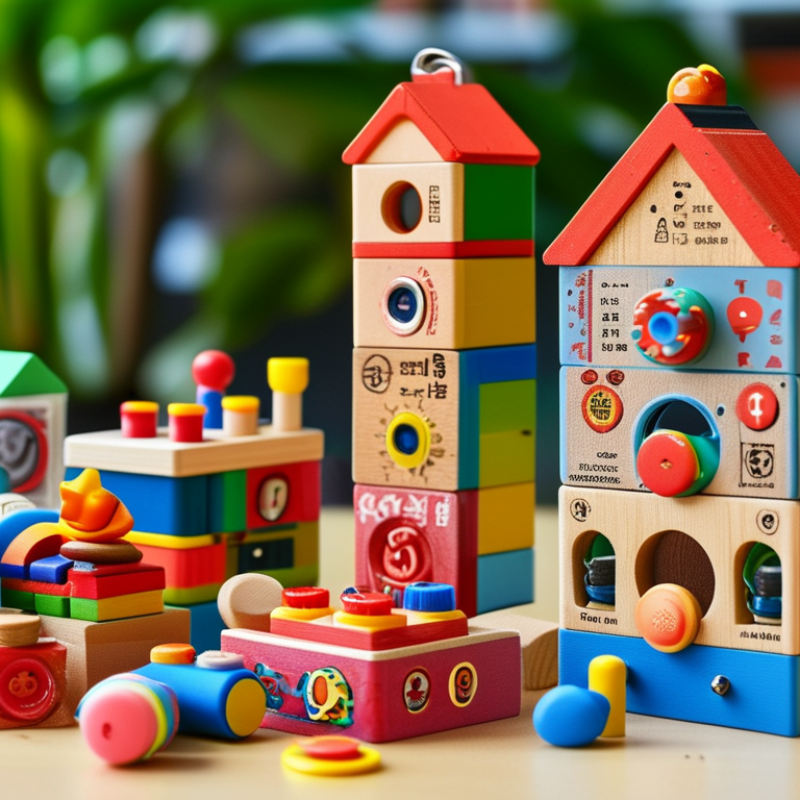
What Certifications Should Educational Toys Have from China?
Safety requirements for educational toys depend on the destination market, product design, and age range. In mainland China, selected toy categories require China Compulsory Certification, commonly called CCC. This may cover certain plastic, metal, electric, ride-on, and projectile toys. Export products may not need CCC, but they still require destination-market compliance.
For the European market, toys generally need CE marking and compliance with the EN 71 safety series. Electric educational toys may also require electrical safety testing. CE marking is not a universal quality certificate. It is the manufacturer’s declaration, supported by technical documents and test evidence. Requirements can include flammability, chemicals, migration of heavy metals, physical hazards, and small parts.
For the United States, ASTM F963 testing and applicable consumer-product requirements are important. Children’s products may also need third-party testing, tracking information, and a Children’s Product Certificate. Check magnets, button batteries, cords, sharp edges, and choking risks carefully. Small parts matter. Packaging warnings must match the tested age group.
In practical sourcing work, I would request the test report, certificate scope, factory address, production date, and sample photographs. The report should identify the exact model, materials, and components. A certificate alone is not proof of every shipment’s safety. I still treat a clean report as a snapshot, not a guarantee. Materials can change quietly. One supplier once replaced a plastic component without updating its documents; that detail could have changed the testing outcome. Regular inspections and batch checks remain necessary.
| Market or Regulation | Relevant Standard or Requirement | When It Applies to Educational Toys | Typical Safety Areas Covered | Evidence Buyers Should Request | Important Status Note |
|---|---|---|---|---|---|
| European Union / EEA | EN 71 series and the EU Toy Safety Directive 2009/48/EC | For toys placed on the EU or EEA market, including puzzles, learning kits, construction sets, activity toys, and electronic educational toys. | Mechanical and physical properties, flammability, migration of certain elements, chemical substances, electric safety, and warnings. | EU Declaration of Conformity, technical file, applicable EN 71 test reports, product labeling, traceability information, and risk assessment. | EN 71 is a harmonized European standard series. Compliance supports CE marking but does not replace the manufacturer's conformity assessment obligations. |
| United States | ASTM F963-23 and the U.S. Consumer Product Safety Improvement Act (CPSIA) | For toys designed or intended primarily for children aged 12 years or younger and sold in the United States. | Mechanical and physical hazards, flammability, batteries, magnets, sound, accessible parts, surface coatings, substrates, and other regulated substances. | Children’s Product Certificate, third-party testing records from a CPSC-accepted laboratory, tracking-label information, and applicable test reports. | ASTM F963 compliance is only one part of U.S. requirements. CPSIA obligations may also include lead, phthalates, testing, certification, and tracking labels. |
| United Kingdom | Toy safety requirements based on the Toys (Safety) Regulations 2011 and designated toy safety standards | For toys placed on the Great Britain market. Separate Northern Ireland rules may require EU conformity arrangements depending on the product and supply route. | Design and construction safety, flammability, chemical migration, electrical risks, warnings, and age grading. | Declaration of Conformity, technical documentation, test reports, labeling, importer details, and the applicable conformity mark. | UKCA requirements apply in Great Britain subject to current transition rules. CE recognition may also remain relevant for certain products during applicable periods. |
| China | China Compulsory Certification (CCC), where the product falls within the applicable compulsory product catalogue; relevant GB toy standards may also apply. | For covered toy categories manufactured or sold in China. Applicability depends on product type, structure, function, and the current compulsory catalogue. | Mechanical and physical safety, flammability, chemical safety, electrical safety for applicable products, and labeling. | CCC certificate when applicable, product test report, Chinese instructions and warnings, factory information, and conformity documentation. | CCC is not automatically required for every educational toy. The exact product classification should be checked against the current Chinese catalogue and standards. |
| International / Reference Standard | ISO 8124 series | Useful for international product development, supplier specifications, and markets that adopt or reference ISO 8124 or aligned national standards. | General safety requirements, flammability, migration of certain elements, warnings, and selected activity-specific hazards. | Test report identifying the exact ISO 8124 parts and editions used, sample description, test methods, and results. | ISO 8124 is a standard, not a universal global certification. Legal acceptance depends on the destination market. |
| Australia and New Zealand | Applicable Australian and New Zealand toy safety requirements, commonly based on the AS/NZS ISO 8124 series | For toys supplied in Australia or New Zealand, subject to the product category and current regulatory requirements. | Physical and mechanical hazards, flammability, chemical migration, small parts, magnets, and required warnings. | Local-market test report, supplier declaration or conformity documentation where applicable, product labeling, and warning statements. | The applicable edition and mandatory requirements should be verified for the destination country before shipment. |
| Electronic or Battery-Powered Toys | Market-specific electrical, electromagnetic compatibility, radio, battery, and chemical requirements | For coding toys, talking books, programmable learning devices, remote-controlled products, and toys containing batteries, charging circuits, Bluetooth, Wi-Fi, or other radio functions. | Electric shock, overheating, battery access, electromagnetic compatibility, radio emissions, charger safety, and restricted substances. | Electrical and EMC test reports, radio approval records where applicable, battery documentation, user instructions, and market-specific declarations. | Toy safety testing alone may not cover every electronic or radio obligation. The product's actual functions determine the additional requirements. |
| Magnetic, Chemical, or Material-Risk Toys | Destination-market rules for magnets, lead, phthalates, plasticizers, heavy metals, batteries, and other restricted substances | For magnetic building sets, science kits, slime or modeling materials, paints, craft kits, scented products, and toys with coatings or treated fabrics. | Ingestion and aspiration hazards, chemical exposure, toxicity, skin contact, leakage, and material migration. | Material declarations, chemical test reports, safety data where relevant, component specifications, and batch or lot traceability. | Requirements vary significantly by market and product design. A general “non-toxic” statement is not a substitute for regulatory testing. |
| All Export Markets | Product risk assessment and documented quality-control process | For every educational toy, especially products with small parts, moving mechanisms, magnets, cords, batteries, or age-related use instructions. | Intended use, foreseeable misuse, age suitability, choking, strangulation, sharp edges, pinch points, durability, and packaging risks. | Pre-production sample approval, inspection records, batch testing, corrective-action records, packaging review, and traceability documents. | A laboratory report is not the same as a product certification. The importer or manufacturer remains responsible for meeting the laws of the destination market. |
Note: The required conformity assessment depends on the destination market, toy category, age range, materials, electrical functions, and intended use. Always verify the current legal requirements and the exact standard edition before placing the product on the market.
: Requirements depend on the destination, materials, design, and children’s age range. Small parts matter.Some toys sold domestically may require CCC certification. Exported toys still need destination-market compliance.
Toys generally need CE marking and testing under the EN 71 safety series.Electric toys may need additional electrical safety testing. Tests can cover flammability, chemicals, heavy metals, sharp edges, and choking hazards.
Testing against ASTM F963 and applicable consumer-product rules is commonly required.Children’s products may also need third-party testing, tracking details, and a Children’s Product Certificate. Battery compartments, magnets, cords, and small parts need careful review.
No. A CE mark is not a universal quality certificate.It reflects the manufacturer’s declaration, supported by technical documents and test evidence. The evidence must match the exact toy, materials, and intended age group.
Request the complete report, not only its cover page.It should identify the factory, exact model, materials, components, testing date, standard version, sample photographs, and final results. Packaging warnings should also match the tested product.
Check whether the laboratory has ISO/IEC 17025 accreditation for the relevant testing scope.Search the accreditation number independently. Contact the laboratory through its official website, not only through certificate details.A QR code can fail.
No. A certificate is evidence from a specific testing point.Materials, colors, batteries, magnets, stitching, or packaging may change later. Keep purchase samples, inspect production, and perform batch checks when practical.
Do not accept a report for a similar model as proof for your model.One changed plastic component can affect the testing result. I might miss a quiet material change, so records and physical comparisons remain necessary.
When asking what certifications should educational toys have, importers should begin with the safety requirements of the destination market and the toy’s intended age, materials, design, and function. Toys from China may need to meet applicable Chinese safety standards before export, while overseas buyers commonly request evidence such as laboratory test reports, conformity documents, and market-specific safety certifications. Requirements can differ for electronic, wooden, magnetic, chemical, or early-learning toys, especially when small parts, batteries, coatings, or accessible components are involved.
Reliable verification is essential. Importers should check that reports identify the correct manufacturer, product model, materials, and tested samples, and that the laboratory is properly qualified for the relevant standards. They should also confirm issue dates, testing scope, document consistency, and whether the certification remains valid for the destination market. A complete compliance review helps reduce customs delays, product recalls, and safety risks while supporting responsible access to international markets.

 Fyre Toys