What Trends Are Shaping the Educational Toy Industry?

Time:2026-10-12 Author:Sophia
0%

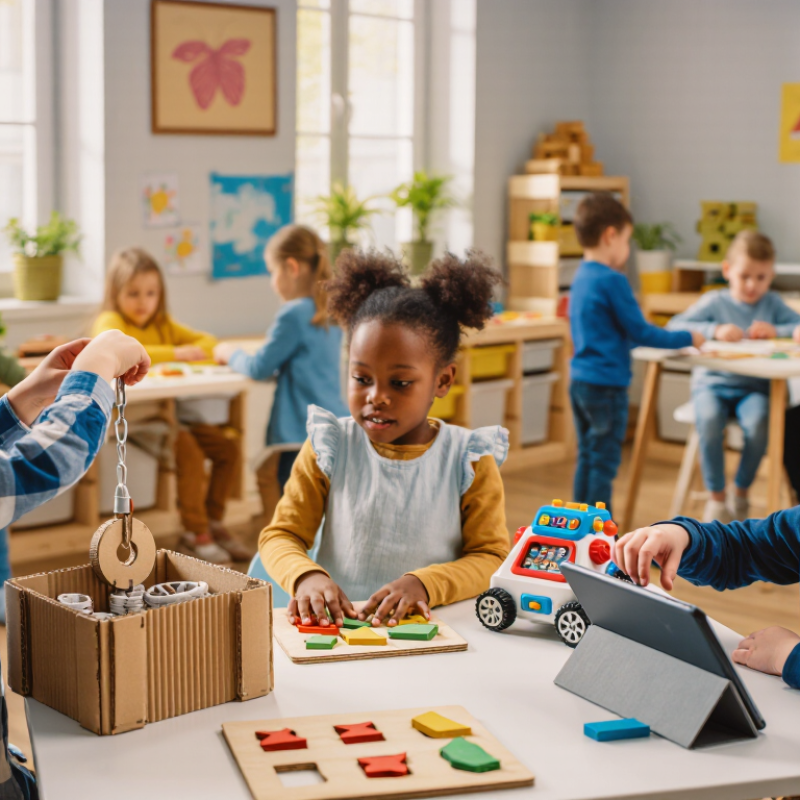
The question “what trends are shaping the educational toy industry” reflects a market changing inside homes, classrooms, and online communities. Parents increasingly want toys that make learning visible, practical, and enjoyable. A child may build a working pulley, sort wooden shapes, or program a small robot beside a tablet. These moments show how STEM and STEAM learning are moving beyond worksheets. They are becoming more tactile, creative, and connected to daily life.

Mitch Resnick, LEGO Papert Professor of Learning Research at MIT, has said, “The best way to get children excited about learning is to give them something they want to play with.” His work supports the growing demand for open-ended toys. These products encourage children to test ideas, make mistakes, and try again. Digital play is also expanding, but balance matters. A well-designed coding toy can develop sequencing skills. A noisy app with bright animations may offer very little learning value. That distinction is easy to miss.

Other important trends include inclusive design, sustainable materials, emotional development, and toys that support collaborative play. Manufacturers are using recycled cardboard, safer wood finishes, and replaceable parts. They are also designing products for different abilities and learning styles. However, not every “educational” label deserves trust. Evidence, age-appropriate design, and transparent instructions should matter more than marketing claims. The industry is progressing, but unevenly. Some products still prioritize novelty over meaningful play. A closer look at these trends can reveal which innovations genuinely help children learn, create, and think independently.
What Trends Are Shaping the Educational Toy Industry?

Definition and Scope of the Educational Toy Industry

The educational toy industry includes products designed to support learning through guided or independent play. Its scope extends beyond alphabet cards and counting blocks. It covers construction sets, sensory materials, science kits, puzzles, role-play tools, and early digital devices. A product belongs in this category when play has a clear developmental purpose, such as improving language, coordination, reasoning, or social skills. Bright packaging alone does not make a toy educational. That distinction matters.

Current trends are widening the definition. Parents and teachers increasingly seek toys that combine physical activity with problem-solving. Open-ended materials are gaining attention because one object can support many age-appropriate activities. Inclusive design is also shaping the market, with clearer textures, adjustable difficulty, and accessible instructions.

However, “educational” remains a flexible claim. In practice, outcomes depend on adult guidance, child interest, and repeated use. Some products promise too much. Evidence is often limited, so buyers should examine age guidance, safety information, and the skills actually supported.

Tips: Observe the child using the toy, not just the advertisement. Choose durable materials, manageable challenge, and instructions that invite conversation. A five-minute test can reveal more than polished claims. Review progress occasionally; a toy may look useful but become repetitive quickly.

Key Trends in Learning and Child Development

Educational toy industry is moving beyond bright colors and simple entertainment. Families increasingly seek tools that support language, problem-solving, movement, and emotional growth. Developmental specialists emphasize open-ended play, where one set of pieces becomes a bridge, shop, or imaginary animal. This flexibility matters because children practice planning without following a single correct answer. In classrooms, I have observed children stay engaged longer when activities connect with familiar routines, such as sorting spoons or measuring water. Small details matter.

Another strong trend is adaptive learning. Some toys adjust difficulty through puzzles, sounds, or guided prompts, while others simply allow children to choose the next challenge. Both approaches can be useful. However, digital features should serve play, not interrupt it with constant lights or rewards. Reliable product decisions require more than a clever demonstration. Parents and educators should check age guidance, material safety, accessibility, and whether the claimed skill appears during real use. Independent testing and child-development research offer stronger evidence than sales language. Still, evidence is not perfect.

Social and emotional learning is also reshaping product design. Cooperative games can invite turn-taking, negotiation, and patience around a kitchen table. Story-based activities may help children name fear or disappointment before those feelings become overwhelming. Inclusive design is gaining importance too, with tactile, visual, auditory, and movement-based options supporting different learners. Yet inclusion cannot be reduced to a wider color palette. Children need meaningful choices. I have sometimes seen adults over-direct play, hoping to create faster progress. That can weaken curiosity. A better role is to watch, ask gentle questions, and accept unfinished towers, mixed-up rules, and quiet discoveries.

Technology and Interactive Play Innovations

What Trends Are Shaping the Educational Toy Industry?

Technology is changing how children learn through play. Interactive toys now combine physical movement with digital feedback, making lessons feel more responsive. A child might rotate a puzzle wheel and hear a sound when the answer is correct. Another toy may use simple sensors to adjust counting tasks after repeated mistakes. These features support immediate feedback, which can help children notice patterns without waiting for adult correction. However, technology alone does not guarantee meaningful learning. A bright screen can attract attention while offering little educational value. The best designs connect digital responses with hands-on actions, conversation, and problem-solving.

Tips: Choose toys with clear learning goals and adjustable difficulty. Test the controls before purchase. Buttons should respond quickly, and instructions should suit the child’s reading level. Check whether the toy works without constant internet access. Privacy also matters, especially when microphones, cameras, or online accounts are involved. Adults should observe play for a few minutes. Does the child explain ideas, make choices, or simply tap repeatedly? That difference is important. It may reveal that an impressive feature needs better design.

Interactive play is also becoming more inclusive. Toys can offer visual, audio, and tactile feedback for different learning preferences. Adjustable volume and larger controls can support children with varied abilities. Still, developers may overlook quiet children who need more time. A slower response option could make the experience fairer. Educational toy innovation works best when technology serves curiosity, not the other way around.

Sustainability, Safety, and Inclusive Toy Design

What Trends Are Shaping the Educational Toy Industry?

Sustainability now influences materials, packaging, durability, and repair. Designers increasingly choose responsibly sourced wood, recycled plastics, or low-impact textiles. Yet material claims need evidence. A recyclable box means little if the toy breaks after one month. In product evaluations, I look for sturdy joins, washable surfaces, and replacement-part guidance. Longer use reduces waste and gives children more time to build meaningful skills. Still, sustainability remains imperfect. Some “eco” materials require careful disposal.

Safety is becoming more specific. Reliable design considers small parts, sharp edges, noise levels, secure batteries, and clear age guidance. Manufacturers should document testing and explain limitations plainly. Adults still need to inspect toys regularly. Especially after rough play. Inclusive design expands who can participate. Toys may offer tactile controls, high-contrast pieces, adjustable difficulty, and characters with varied abilities and backgrounds. These details support different sensory, motor, language, and learning needs. However, inclusion should not become a decorative label. Children and educators should help shape the design.

Tips: Choose durable toys with clear safety information and repair options. Check whether controls are easy to grip and understand. Observe how a child actually uses the toy, not only how it looks in advertisements. Ask whether the packaging is excessive. Also, be willing to revise your choice. A beautiful toy may still exclude some learners.

Consumer Demand and Market Development Patterns

Consumer demand is reshaping educational toys from simple playthings into tools for daily learning. Parents increasingly seek products that combine movement, problem-solving, and emotional development. A wooden balance set may support coordination, while a number puzzle can turn ten quiet minutes into practice. Teachers and child development specialists also influence purchases when progress can be observed. Buyers remain cautious. They compare age guidance, material safety, repair options, and independent testing before spending.

The market is moving toward adaptable toys with multiple difficulty levels. One kit may serve a preschooler today and a younger sibling later. This flexibility matters as household budgets face pressure. Compact designs are gaining attention too. Apartment families prefer stackable pieces, washable surfaces, and storage boxes that fit beneath a bed. Demand is spreading beyond major cities through online demonstrations and local education communities. Still, digital promotion can exaggerate learning claims. Reliable evidence remains uneven.

Manufacturers are responding with recycled materials, clearer instructions, and quieter designs for shared homes. Rental services and subscription models are testing whether families want variety without crowded shelves. Early sales may look promising, but repeat use tells a different story. Some toys lose attention after two days. That is a warning, not a failure. Developers should observe real play, consult educators, and revise designs accordingly. The strongest growth may come from products that respect parents’ time, children’s curiosity, and the limits of available evidence.

The global educational toy market is projected to expand steadily as parents and educators increasingly prioritize STEM learning, creativity, problem-solving, and screen-free play. The forecast reflects an estimated compound annual growth rate of approximately 10.5% between 2023 and 2028.

Source: Public market research estimates compiled from Grand View Research and related industry outlooks. Values are rounded estimates in billions of U.S. dollars.

FAQS

What skills should educational toys support?

Good toys can support language, movement, planning, problem-solving, and emotional growth. No single toy develops everything.

Why is open-ended play valuable?

Children can turn the same pieces into a bridge, shop, or imaginary animal. This encourages planning without one correct answer.

How can everyday routines support learning?

Simple activities can teach useful ideas. Children might sort spoons, measure water, or count objects during play.

Should educational toys include digital features?

Digital features can adjust difficulty or offer gentle prompts. They should support play, not fill it with constant lights.

How can parents judge learning claims?

Check age guidance, material safety, accessibility, and independent testing. Watch whether the claimed skill appears during real use.

What makes a toy useful for social and emotional learning?

Cooperative games can practice turn-taking, negotiation, and patience. Story activities may help children name fear or disappointment.

How can toys support different learners?

Tactile, visual, auditory, and movement-based choices can improve access. Inclusion means meaningful options, not only more colors.

What features matter in small homes?

Stackable pieces, washable surfaces, and compact storage can reduce clutter. A box beneath the bed may be enough.

Do adaptable toys offer better value?

Toys with several difficulty levels may serve different ages. Still, a flexible toy can lose attention quickly.

How should adults guide children during play?

Watch closely and ask gentle questions. Accept unfinished towers, mixed-up rules, and quiet discoveries. Over-directing may weaken curiosity.

Conclusion

The educational toy industry includes products designed to support children’s learning, creativity, problem-solving, communication, and social development through play. Current discussions about what trends are shaping the educational toy industry highlight a shift toward child-centered experiences that combine academic skills with emotional intelligence, collaboration, and hands-on discovery. Toys are increasingly created to adapt to different ages, abilities, interests, and learning styles, helping children develop at their own pace.

Technology is also transforming interactive play through digital features, responsive feedback, and blended physical-and-screen experiences, while thoughtful design aims to keep play meaningful rather than purely passive. At the same time, sustainability and safety are becoming essential priorities, encouraging the use of durable, responsibly sourced, and non-toxic materials. Inclusive design is expanding representation and accessibility so more children can participate comfortably. Consumer demand is being influenced by parents and educators seeking toys that offer educational value, long-term usefulness, environmental responsibility, and engaging play.

Sophia

Sophia

Sophia is a dedicated marketing professional with an exceptional depth of knowledge about her company's products and services. With a keen understanding of market trends and customer needs, she crafts insightful blog posts that not only inform but also engage readers, enriching the company’s online......