Creating a Montessori-inspired space at home does not require a dedicated classroom or expensive materials. It begins with noticing how your child moves, chooses, concentrates, and returns to activities. The central question is simple: how to create a Montessori learning environment at home without making the room feel controlled or crowded? A thoughtful space offers freedom within clear, safe limits. It invites purposeful movement, practical work, and quiet discovery.
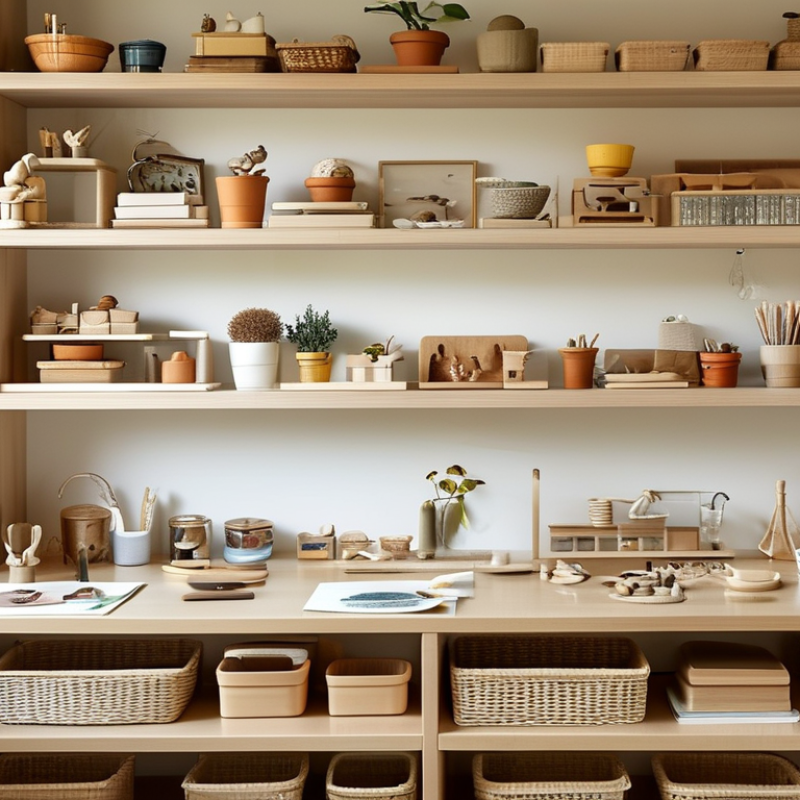
In this guide, ten practical tips will help you shape that environment step by step. A low shelf can display a few carefully selected activities. A small table can support drawing, pouring, sorting, or snack preparation. Open baskets, natural textures, and child-height hooks make daily routines easier to follow. Materials should be real, manageable, and suited to the child’s current abilities. Safety remains essential, especially around water, food preparation, small objects, and furniture that could tip.
Keep observing.
A Montessori space is not a perfect arrangement frozen in place. It changes as attention, coordination, interests, and confidence develop. You may offer too many choices at first, or place materials beyond comfortable reach. That is useful feedback, not failure. Watch what gets ignored, misused, or repeated. Then simplify, reposition, or replace it. These adjustments reflect the practical side of Montessori education: respect the child, prepare the environment, and let evidence from everyday life guide your decisions.
A Montessori learning space works better when its goals match a child’s current development. The CDC states that developmental milestones describe skills most children, at least 75%, can do by a specific age. Use its milestone checklists as planning tools, not rigid labels. For a 12-month-old, place a sturdy basket, two safe objects, and a low shelf nearby. The goal might be grasping, releasing, and exploring independently. At 24 months, try a small pitcher, chunky puzzles, and picture books. These materials support carrying, problem-solving, and early language.
Observe before changing the room. CDC guidance encourages developmental monitoring during everyday activities. Watch whether your child points to request help, follows a simple instruction, or uses several words. Write the date and setting. The American Academy of Pediatrics recommends standardized developmental screening at 9, 18, and 30 months, with autism screening at 18 and 24 months. Home observations cannot replace professional screening. They can provide useful context during a pediatric visit.
Keep goals small and visible. “Put shoes in the basket” is clearer than “build independence.” I sometimes offer too many materials, then mistake overstimulation for disinterest. Removing half the shelf often reveals more. Recheck the space every few weeks. A goal should stretch the child gently, not turn play into testing. If a skill is absent, inconsistent, or suddenly lost, share your notes with a qualified healthcare professional.
How to Create a Montessori Learning Space at Home 10 Tips
Make the Room Safe and Reachable: Two Tips Guided by CPSC Standards
A Montessori room should invite children to act independently, but independence needs careful preparation. Keep shelves low enough for your child to reach without climbing. Place books, baskets, and simple activities at eye level. Leave a clear walking path between the bed, shelf, and work mat. In practice, caregivers often notice hazards only after a child moves quickly. I have found that sitting on the floor reveals loose cords, sharp corners, and unstable furniture adults may overlook.
Safety follows reachability. CPSC safety guidance emphasizes securing tall furniture to the wall to reduce tip-over risks. Check dressers, bookcases, and storage units regularly, especially after rearranging the room. Keep heavy items on lower shelves. Avoid placing attractive objects near windows, cords, or climbing surfaces. Window-covering cords should remain completely out of reach, since they can create a strangulation hazard. Use cordless options when possible.
Inspect small materials carefully. Objects that fit through a small-parts test cylinder can pose choking risks for young children. This point is easy to miss. I once underestimated how quickly a child could separate a simple activity into tiny pieces. Choose age-appropriate materials, remove damaged parts, and observe play before leaving the child alone. Cover unused outlets, secure lamps, and keep cleaning products outside the child’s access. A beautiful room is not enough. Its safety plan must survive everyday movement.
| No. | Montessori Tip | Reachability Target | Safety and Learning Rationale | Practical Home Check |
|---|---|---|---|---|
| 1 | Anchor shelves and other tall furniture CPSC-guided safety tip | Place daily-use materials on the lowest shelves, generally within the child’s standing reach. | The U.S. Consumer Product Safety Commission advises securing furniture that could tip over. Anchoring reduces the risk of a shelf being pulled down during climbing or reaching. | Secure the unit to a wall or other suitable structural support according to the furniture instructions. Test that it does not rock, slide, or tip when gently pulled. |
| 2 | Inspect toys and learning materials for hazards CPSC-guided safety tip | Offer only age-appropriate materials that the child can handle safely and return independently. | CPSC safety guidance emphasizes checking products for recalls, loose parts, breakage, sharp edges, and choking hazards. Small parts are especially dangerous for children under 3 years. | Before each use, remove cracked, broken, splintered, or loose components. Review current government recall information and follow the age guidance supplied with each product. |
| 3 | Use low, open shelving | Keep the lowest shelf close to floor level and place the most frequently used items between knee and shoulder height. | Open shelves allow children to see limited choices, select an activity, and put it away without adult assistance. Lower storage also reduces unnecessary climbing. | Arrange only 4–8 activities at one time. Leave clear space between baskets and confirm that no item requires the child to stretch onto furniture. |
| 4 | Create a clear movement path | Maintain an unobstructed walking route of approximately 36 inches (91 cm) where the room allows. | Clear circulation supports independent movement and lowers the chance of trips around shelves, tables, and floor work. | Walk through the room at the child’s pace. Remove loose cords, unstable stools, sharp-edged objects, and baskets that protrude into the path. |
| 5 | Provide child-sized furniture | Choose a table and chair that allow the child’s feet to rest on the floor and elbows to bend comfortably on the tabletop. | Proper proportions support concentration, balance, and independent participation in drawing, sorting, reading, and practical-life activities. | Check that the chair is stable on all four legs, the table does not wobble, and the child can sit down and stand up without climbing. |
| 6 | Use non-slip floor materials | Place a flat, low-profile mat in the work area without raised edges or curled corners. | A stable floor surface defines the work area while reducing slipping and tripping risks during floor-based activities. | Secure the underside of the mat if needed. Replace mats that slide, fray, curl, or become difficult to clean. |
| 7 | Organize materials in complete sets | Store each activity in one tray, basket, or clearly defined space that the child can carry safely. | Complete sets make the activity understandable and encourage a predictable sequence: choose, use, return, and check the space. | Remove duplicate or incomplete materials. Keep heavier items on lower shelves and avoid containers that are difficult for small hands to lift. |
| 8 | Control access to adult-only items | Keep cleaning products, medicines, tools, batteries, sharp objects, and small hazardous parts completely out of the child’s access. | Montessori independence applies to safe, prepared choices—not unrestricted access to dangerous substances or equipment. | Use locked storage where necessary. Do not rely on a high shelf alone, because children may climb or furniture may be moved. |
| 9 | Improve lighting without creating glare | Position reading and tabletop work near even natural or artificial light, while keeping cords outside the walking path. | Adequate, comfortable lighting helps children see details and reduces eye strain during close work. | Check the work surface from the child’s seated position. Remove glare, replace flickering bulbs, and secure electrical cords against the wall. |
| 10 | Review the room at the child’s eye level | Conduct the review from both sitting and standing positions at least once each month. | A child-level inspection reveals hazards and access problems adults may miss, while regular rotation keeps the environment orderly and developmentally appropriate. | Look for loose hardware, damaged materials, reachable cords, blocked exits, unstable objects, and activities that are too difficult or too easy. |
A Montessori learning space works best when children can reach materials without asking for help. Use low shelves, open baskets, and clear labels. Keep only six to eight activities visible. Too many choices can create clutter and frustration. I learned this after watching a child empty every basket, then lose interest.
Place practical materials near real routines. A small tray might hold a cloth, a child-sized brush, and a spray bottle filled with water. Rotate items when interest fades, not on a rigid schedule. Observe first. The perfect setup on paper may not suit your child’s current skills.
Screens need an equally deliberate place. Keep tablets and televisions outside the main work area. For children aged two to five, American Academy of Pediatrics guidance recommends no more than one hour of screen use daily, with consistent limits and adult involvement. The World Health Organization also advises limiting sedentary screen time to one hour for children aged two to four; less is better, according to its 2019 guidelines.
Create a visible screen basket and a simple timer. Offer a puzzle, pouring work, or picture books before turning anything on. Watch together when possible, and discuss what the child sees. I sometimes rely on screens during busy evenings. That is real life, not failure. Still, tracking the habit for one week can reveal whether convenience is quietly replacing hands-on exploration.
How to Create a Montessori Learning Space at Home: Add Movement and Rest Zones
A Montessori room should invite movement without becoming chaotic. WHO’s Guidelines on Physical Activity, Sedentary Behaviour and Sleep recommend at least 180 minutes of physical activity daily for children aged three to four. At least 60 minutes should involve moderate-to-vigorous movement. I use a low shelf, open floor space, and a soft mat to make activity visible and reachable. A child can carry a small basket, crawl through a fabric tunnel, or balance along taped floor lines. Keep paths clear. Furniture should remain stable and child-sized.
The rest zone needs equal respect. WHO reports that preschool children aged three to four need 10 to 13 hours of sleep across a 24-hour period, including naps. A small rug, cushion, and warm reading light can create a calm corner. Keep it away from busy walkways. Offer books, sensory bottles, or quiet picture cards, but avoid filling every inch. Too many choices can make rest difficult. A simple timer may help children understand transitions, although mine sometimes became another distraction.
The Centers for Disease Control and Prevention emphasizes that routines support healthy development, but home environments rarely work perfectly. My first layout failed because the movement area was beside the reading basket. Children ran through quiet time. I moved the basket behind a low divider and reduced the materials. Observe the room for several days. Adjust spacing, noise, and access based on the child’s actual behavior, not an ideal photograph.
Daily time guidance for children aged 3–4, based on WHO recommendations. Use the movement target to plan active learning opportunities and the sleep range to support a calm rest zone.
Children aged 3–4 should have at least 180 minutes of physical activity across the day, including at least 60 minutes of moderate-to-vigorous activity. Sedentary screen time should be no more than 60 minutes, and recommended sleep is 10–13 hours, including naps. The 60-minute energetic activity target is part of the 180-minute movement target, not additional time.
Source: World Health Organization, Guidelines on physical activity, sedentary behaviour and sleep for children under 5 years of age.
A Montessori learning space begins with observation, not decoration. Watch your child for several mornings. Note which tasks invite concentration, where movement breaks, and what causes frustration. During the three-hour work cycle, children can choose purposeful activities, repeat them, and return to deeper focus. At home, this does not mean forcing three uninterrupted hours. A younger child may need a shorter period, rest, or help with transitions. The principle matters more than the clock: protect sustained, self-directed work.
Keep materials visible, limited, and reachable on low shelves. Place one practical task, such as pouring water, beside a small cloth for spills. Observe quietly before offering help. I once moved in too quickly when a child struggled with a zipper; waiting revealed a careful strategy developing. Still, observation is not passive approval. Intervene for safety, then step back. Record what the child actually uses, not what you hoped to teach.
Rotate materials when interest fades, skills become secure, or the shelf feels crowded. Change one item at a time, then watch for several days. Refinement may mean lowering a hook, simplifying instructions, or removing an attractive distraction. My own setup became too orderly and less welcoming; the child stopped choosing it. That mistake mattered. A useful space should invite independent action, while adults continually test assumptions against real behavior. Short notes can guide the next adjustment.
Use low shelves, open baskets, and materials placed near the child’s eye level. Leave a clear path between the bed, shelf, and work mat. Independence needs preparation.
Secure tall shelves, dressers, and storage units firmly to the wall. Keep heavy objects on lower shelves. Recheck furniture after moving anything.
Sit on the floor and inspect the room from the child’s height. Look for loose cords, sharp corners, unstable lamps, and reachable window coverings. This simple view can reveal problems quickly.
Keep about six to eight activities on the shelf. Use trays, baskets, and simple labels. Too many choices often create clutter. I once watched a child empty everything and stop playing.
Choose materials suitable for the child’s age and abilities. Remove broken pieces immediately. Small parts can become choking hazards, even during familiar activities. Observe play before leaving the child alone.
Aim for no more than one hour daily, with an adult nearby. Keep screens outside the main work area. A visible basket and simple timer can support consistent limits.
Keep open floor space, stable furniture, and a soft mat. Try taped floor lines, a small basket, or a fabric tunnel. Paths should stay clear. My first layout failed because children ran through the reading area.
Place a cushion, small rug, warm reading light, and a few quiet books away from busy paths. Preschool children aged three to four generally need 10 to 13 hours of sleep daily. Keep the corner simple. Too many items may become another distraction.
Creating a Montessori learning space at home begins with clear, age-appropriate goals. Use developmental milestones to choose activities that match your child’s current abilities, while arranging furniture, shelves, and materials so they are safe and easy to reach. Keep the room orderly, limit unnecessary screens, and provide simple hands-on materials that encourage concentration, independence, and practical life skills. For young children, screen use should remain limited, with most learning happening through real-world exploration.
A balanced environment should also include space for active movement, quiet rest, and focused work. Offer opportunities for daily physical activity while protecting an uninterrupted work period in which your child can explore independently. Observe how your child uses the space, rotate materials when interest decreases, and refine the setup as skills and needs change. These principles provide a practical foundation for how to create a Montessori learning environment at home—one that supports confidence, curiosity, self-regulation, and joyful learning.

Fyre Toys