Choosing educational toys for a preschool classroom involves more than filling shelves with colorful objects. The right materials invite children to touch, build, sort, pretend, communicate, and solve small problems independently. A wooden puzzle may strengthen spatial reasoning, while a set of textured blocks can support early mathematics and sensory exploration. These learning moments often appear during ordinary play.
Teachers need a practical process for how to choose educational toys for preschool classrooms. Consider developmental suitability, durability, safety, accessibility, and the learning goals of the group. A toy should be easy to clean and strong enough for daily use. It should also allow more than one correct answer. Open-ended materials, such as loose parts, play food, magnetic tiles, and dress-up items, can support language, cooperation, creativity, and fine-motor development.
Observe the children using each toy. That matters.
A professional choice also reflects classroom experience and reliable guidance from early-childhood specialists, manufacturers, and safety authorities. However, no checklist can predict every outcome. A toy that looks educational may become frustrating, ignored, or difficult to share. Even experienced teachers sometimes choose materials that do not fit a particular group. Reviewing children’s engagement, conflicts, questions, and repeated play patterns helps improve future decisions. This guide explores leading toy categories and explains how thoughtful selection can create safer, richer, and more inclusive preschool learning environments.
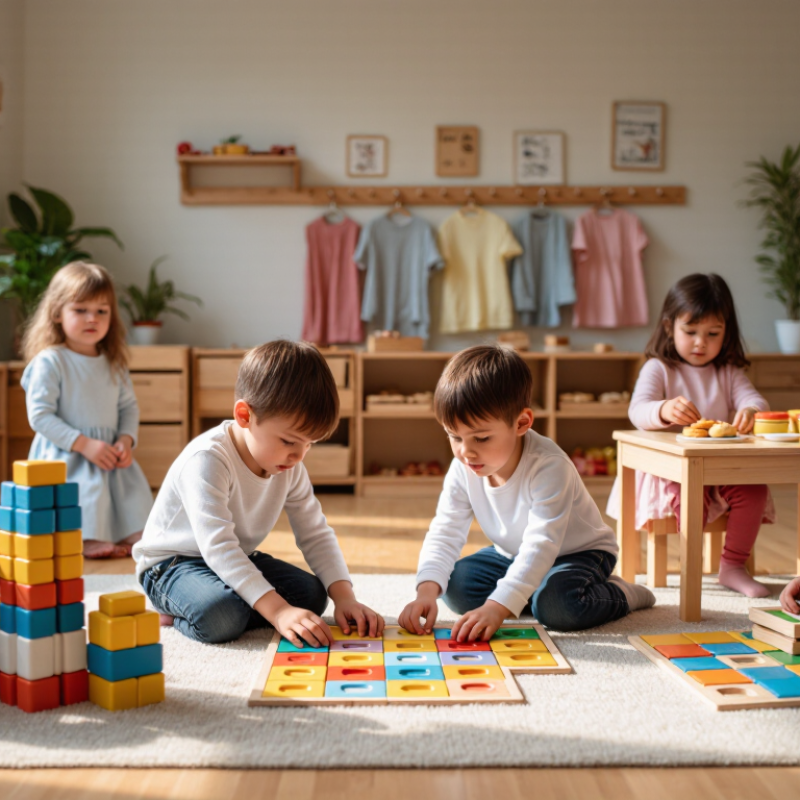
Understanding Educational Toys for Preschool Development
Educational toys for preschool classrooms should support real developmental needs, not simply fill shelves. Children learn through touching, sorting, building, pretending, and talking with others. A good toy can strengthen fine motor control, early language, problem-solving, and emotional expression. For example, wooden counters invite children to compare quantities, while picture cards encourage storytelling and new vocabulary. Open-ended materials often create richer play because children can use them in several ways.
Teachers should examine each toy before placing it in a learning area. Is it suitable for small hands? Can children use it without constant adult correction? Are the materials durable, washable, and free from sharp edges or loose parts? Clear labels and simple storage also help children make independent choices. Developmental research supports play-based learning, but classroom observation remains essential. A toy that works well for one group may frustrate another.
Watch the children closely.
Do they cooperate, repeat actions, or abandon the activity quickly? These responses provide useful evidence. I have seen children ignore carefully selected puzzles but spend twenty minutes building roads with plain blocks. That experience challenges adult assumptions about what looks educational. Teachers may need to adjust the difficulty, add visual prompts, or remove a toy temporarily.
Some children also need quieter materials, especially after noisy group activities. Choosing educational toys requires professional judgment, regular observation, and a willingness to reconsider familiar choices.
Key Criteria for Choosing Classroom-Appropriate Toys
Top Educational Toys for Preschool Classrooms: How to Choose
Choosing classroom toys starts with learning goals, not novelty. A suitable toy supports language, movement, problem-solving, or social cooperation. The WHO’s 2019 guidelines recommend at least 180 minutes of daily physical activity for children aged three to four, including 60 active minutes. Therefore, balance puzzles with climbing equipment, push toys, and movement games. Children need action, not only table work.
Safety must be visible in daily use. Check for loose parts, sharp edges, unstable bases, and washable surfaces. The U.S. Consumer Product Safety Commission’s 2023 toy injury report identifies falls, collisions, and swallowed components as recurring risks. Choose oversized pieces for shared areas. Store smaller pieces in supervised stations. A toy can look harmless and still create problems.
Accessibility matters, too. Offer open-ended materials with different textures, weights, and difficulty levels. Include toys that encourage communication without requiring advanced speech. OECD’s Starting Strong research emphasizes responsive interactions and intentional learning environments. Teachers should observe whether children cooperate, adapt rules, and remain engaged. I would not assume a colorful toy is educational. Some attractive materials create noise but little learning. Trial periods help. Ask children what they changed, built, or imagined. Then remove what repeatedly excludes, frustrates, or distracts them.
Essential Toy Categories for Preschool Learning
Preschool classrooms need toys that invite purposeful play, not just bright displays. In my classroom observations, children stayed engaged longer when materials supported movement, language, and problem-solving. Essential categories include building toys, pretend-play props, puzzles, art materials, books, and sensory tools. Each category should offer simple entry points and room for growing skills.
Building blocks develop spatial awareness, balance, and early mathematics. Children compare sizes, count pieces, and revise unstable towers. Pretend-play materials encourage conversation, cooperation, and emotional expression. A small kitchen area or medical-play set can turn ordinary moments into rich vocabulary practice. Puzzles and matching games strengthen visual reasoning, memory, and persistence. Keep some tasks challenging.
Books and storytelling cards support listening, questioning, and early literacy. Choose stories with varied families, abilities, and everyday experiences. Art materials should allow open-ended choices, such as thick crayons, washable paint, clay, and recycled paper. Sensory bins with safe, age-appropriate materials can build descriptive language and fine-motor control. Supervision remains essential.
Toy selection requires careful observation. Small parts may create hazards for younger children, so age guidance and local safety standards matter. I once kept too many options available, and play became scattered. Fewer, well-organized materials worked better. Still, no category fits every child equally; educators should adjust choices after watching interests, accessibility needs, and social interactions.
Evaluating Safety, Durability, and Classroom Usability
Choosing educational toys for preschool classrooms requires more than attractive colors or clever features. Safety comes first. Check for smooth edges, secure parts, non-toxic materials, and age-appropriate sizes. Avoid pieces that could fit entirely inside a small-parts tester. Small details matter. Washable surfaces also reduce the spread of germs during busy classroom routines.
Durability should be judged through daily use, not packaging claims. Press joints, twist handles, and inspect hinges before purchasing. A sturdy puzzle should survive repeated handling without splintering or losing its shape. In classroom observations, toys often fail at storage points rather than during play. Cracked bins and loose lids create unnecessary risks. Test them yourself. Still, no toy is indestructible, especially when several children share it.
Classroom usability depends on how easily children can reach, understand, and return each item. Choose toys that support open-ended play, cooperation, language, and early problem-solving. Clear storage labels help young children build independence. Pieces should be easy to count before and after activities. I once underestimated how much noise a “simple” toy could create in a small room. That was a useful correction. Teachers should review toys regularly, remove damaged pieces, and observe whether children use them as intended. A toy may be educational in theory but frustrating in practice. Safety checks should follow local requirements and the classroom’s actual needs, not assumptions.
Top Educational Toys for Preschool Classrooms: How to Choose
The chart compares common preschool toy categories using a 1–5 classroom evaluation rubric. Safety considers age appropriateness, hazards, and material quality; durability considers construction, cleanability, and repeated use; classroom usability considers setup, storage, sharing, and learning value.
Building blocks and pretend-play sets score strongly because they support collaborative learning and repeated use. Art materials require closer supervision, while puzzles and sensory-play equipment should be selected for age-appropriate pieces, easy cleaning, and secure storage.
Organizing and Using Toys for Effective Learning Centers
A strong preschool learning center begins with purposeful toy organization. Choose open-ended blocks, counting objects, puzzles, pretend-play materials, and simple art tools. Each item should support a clear skill, such as language, fine-motor control, early mathematics, or cooperation. In my classroom experience, children use materials more independently when shelves stay low and labels include both words and pictures. Keep only a manageable number of toys available. Too many choices create noise and unfinished play.
Arrange toys by learning purpose, not by color or size. Place wooden blocks near photos of buildings, measuring tools, and paper for planning. Add counting bears, number cards, and small trays to the mathematics center. In the dramatic-play area, baskets can hold fabric, menus, safe utensils, and writing pads. Store loose pieces in shallow containers so children can see and return them. A two-minute cleanup routine helps, though it rarely works perfectly.
Observe how children actually use each material. A puzzle may become a storytelling prompt, while toy food may inspire informal addition. Record these moments briefly and adjust the center every few days. Remove broken pieces immediately and check small parts against classroom safety guidance. Rotate materials when interest fades, but keep familiar favorites nearby. I sometimes provide too much challenge and need to simplify the setup. That mistake is useful. Children’s questions, repeated actions, and conflicts reveal whether the center supports learning or merely fills space.
Conclusion
Choosing the right educational toys for preschool classrooms begins with understanding how young children learn through play. Effective toys should support key areas of development, including language, early mathematics, problem-solving, creativity, fine-motor skills, social interaction, and emotional growth. When considering how to choose educational toys for preschool classrooms, teachers should look for materials that match children’s ages, abilities, interests, and learning goals while offering opportunities for open-ended exploration and cooperative play.
Classroom toys should be safe, non-toxic, sturdy, easy to clean, and appropriately sized for young children. Useful categories include building materials, puzzles, pretend-play resources, art supplies, sensory tools, books, counting objects, and movement equipment. Teachers should also evaluate whether toys are simple to store, accessible to children, and flexible enough for individual or small-group activities. Organizing materials into clearly defined learning centers can encourage independence, reduce clutter, and make it easier to connect play experiences with intentional teaching.

 Fyre Toys