2026 Best Sensory Toys for Child Development?

Time:2026-09-17 Author:Charlotte
0%

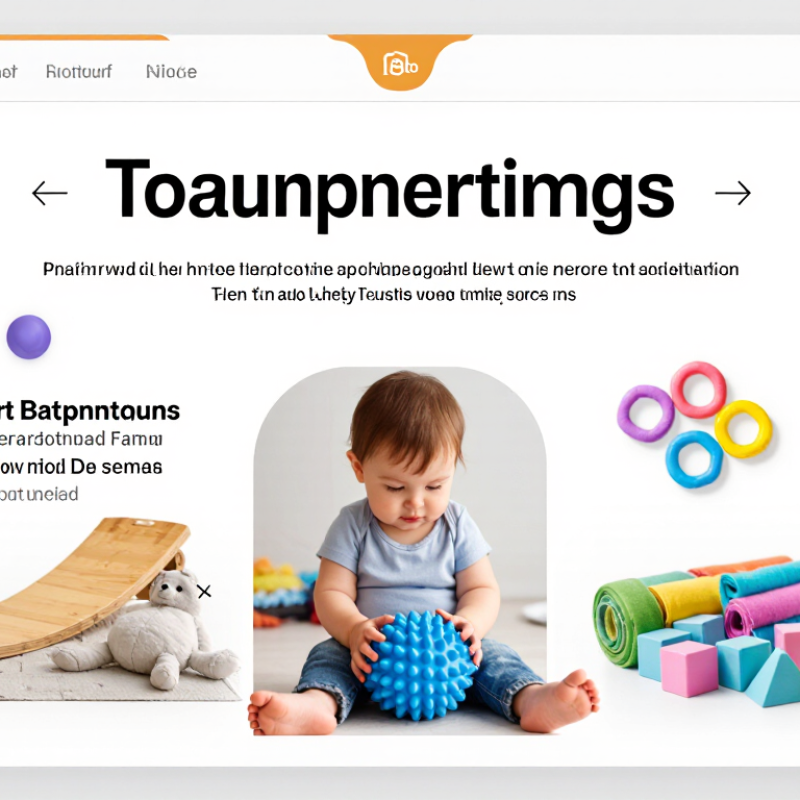
Choosing a sensory toy in 2026 means looking beyond bright colors and popular packaging. Children explore through touch, movement, sound, sight, and even resistance. A textured ball may support hand awareness, while a balance board can invite controlled movement. However, one toy rarely suits every child.

Parents and educators often ask, “how do sensory toys help children's development?” The answer depends on the child, the setting, and the way the toy is used. Sensory play may encourage fine-motor practice, body awareness, communication, attention, and emotional regulation. Pediatric occupational therapists generally recommend observing a child’s responses instead of forcing participation. A child who enjoys squeezing putty may avoid noisy electronic toys. That difference matters.

Small details can reveal useful patterns. Does the child grip a toy for ten seconds, then throw it? Do they become calmer after slow rocking? Do they seek firm pressure during transitions? These observations can guide thoughtful choices, but they are not diagnoses. Sensory toys should complement play, conversation, sleep, movement, and supportive relationships. They cannot replace professional assessment when developmental concerns persist.

Safety remains practical, not optional. Check age guidance, choking risks, washable surfaces, secure parts, and material information. Supervise water beads, weighted items, and toys with cords or small components. Some product claims sound impressive but lack strong evidence. This guide compares promising options carefully, while admitting an important limitation: the “best” sensory toy is not universal. The best choice is safe, suitable, and genuinely useful for one particular child.
2026 Best Sensory Toys for Child Development?

Sensory Toys Defined: Five Input Types and Core Developmental Skills

Sensory toys are tools that offer controlled input through play. They are not magic fixes. Children explore texture, light, sound, body pressure, and movement. These experiences may support attention, coordination, communication, and emotional regulation. The best choice matches the child’s response, age, and current developmental needs.

Tactile, visual, and auditory exploration
Tactile toys include textured fabric, soft clay, or safe objects with contrasting surfaces. They can strengthen hand awareness and fine-motor control. Visual toys use color, shape, motion, or changing patterns. They invite tracking, visual discrimination, and early problem-solving. Auditory toys produce gentle sounds, helping children notice rhythm, volume, and direction. Keep sound levels low. Some children need silence more than stimulation.

Proprioceptive input comes from pushing, pulling, squeezing, or carrying. It helps children sense body position and use force more accurately. Vestibular input comes through movement, such as rocking, spinning, or balancing. It may support posture and spatial awareness, but fast movement can overwhelm some children. Observe breathing, facial tension, and escape attempts. Pause early. A pediatric occupational therapist can guide individualized choices, especially when sensory differences affect sleep, eating, learning, or safety. I have found that simple household play can reveal more than a crowded toy shelf. Still, observation is not diagnosis, and progress rarely follows a straight line.

Age Matching by CDC Milestones: Toys for Ages 2, 3, 4, and 5

2026 Best Sensory Toys for Child Development?
Age Matching by CDC Milestones: Toys for Ages 2, 3, 4, and 5

CDC’s developmental checklists describe skills that at least 75% of children can perform by a certain age. They are guides, not diagnoses. At age two, choose chunky shape sorters, textured balls, and simple push-pull toys. These encourage grasping, movement, and two-word communication. Keep pieces large. Toddlers still explore with their mouths.

At age three, sensory play can support conversation and pretend play. Try washable dough, large interlocking blocks, and rhythm instruments. CDC milestones include back-and-forth exchanges and drawing a circle. At four, offer pattern cards, safe sand trays, and pretend-care materials. Children commonly begin naming colors, catching a large ball, and expanding imaginative play. At five, use counting manipulatives, balance equipment, and simple rule-based games. These match early counting, letter awareness, and cooperation.

The American Academy of Pediatrics clinical report, “The Power of Play,” links play with language, executive function, social skills, and physical development. However, no toy guarantees a milestone. That claim would be careless. A child may reject a highly recommended texture yet enjoy a cardboard box. Observe reactions, change one feature at a time, and supervise small components. CDC also advises discussing concerns with a healthcare professional rather than waiting. Age matching helps, but the child’s real behavior matters more than the package label.

Evidence Review: AAP Screening at 9, 18, and 30 Months

2026 Best Sensory Toys for Child Development?

The American Academy of Pediatrics recommends developmental screening at 9, 18, and 30 months. Autism-specific screening is recommended at 18 and 24 months, not 30 months. This distinction matters. Screening checks communication, movement, problem-solving, and social skills. Sensory toys can support play, but they cannot diagnose delays or replace professional assessment.

The CDC’s 2022 ADDM surveillance report identified autism in about 1 in 31 eight-year-old children. Earlier observation remains valuable, especially when a child loses skills, avoids interaction, or reacts strongly to everyday sounds.

Choose toys that invite simple actions. Try textured balls, nesting cups, soft blocks, or supervised water play. Watch how the child responds. Do they reach, explore, imitate, or request help?

These small details can inform conversations with a pediatrician. Evidence for specific sensory toys is still limited. I would not call one toy “best” for every child. That claim needs more research.

Tips:

Offer one new texture at a time. Keep play brief and calm. Stop if the child becomes distressed. Record meaningful behaviors, including eye contact, gestures, sounds, and recovery after frustration.

Bring those notes to visits at 9, 18, and 30 months. The AAP’s developmental surveillance guidance supports combining caregiver observations with standardized screening tools. Parents may miss patterns. Professionals may miss home details. Both perspectives matter.

Safety Standards: CPSC Small-Parts Rules and ASTM F963-23

2026 Best Sensory Toys for Child Development?

Sensory toys should support touch, movement, focus, and safe exploration. Safety starts with age grading, not marketing language. Under CPSC small-parts rules, toys for children under three must not contain detachable parts that fit the small-parts cylinder. The cylinder measures about 1.25 inches wide and 2.25 inches long. Beads, removable discs, and loose fillings deserve careful inspection.

ASTM F963-23 adds requirements for toy materials, testing, labeling, and mechanical hazards. Its provisions are referenced in the mandatory federal toy safety standard. CPSC’s 2023 Toy-Related Deaths and Injuries report recorded about 231,000 emergency-department-treated toy injuries among children under 15. It also reported 10 toy-related deaths. These figures make routine checks practical, not excessive. A soft surface can still hide a loose seam. A “quiet” sensory item may still contain a detachable piece. My own review checklist can miss hidden wear, especially after repeated washing.

Tips: Press seams gently. Twist handles. Check for cracks, odor, and loose filling. Keep small parts away from children under three. Follow the manufacturer’s age guidance, and supervise mouthing or vigorous play. Ask for test documentation when safety claims seem vague. A compliance label alone is not proof of safe use. CPSC guidance and accredited laboratory testing offer stronger evidence, but real-world supervision remains essential.

2026 Best Sensory Toys for Child Development? — Safety Standards: CPSC Small-Parts Rules and ASTM F963-23

Developmental value is based on the type of sensory input and the skills commonly supported. Safety suitability depends on the child’s age, developmental level, product construction, intended use, and active supervision.
Product Category Primary Sensory Input Potential Developmental Benefits Typical Suitable Age Range* Suggested Safety Priority Key Safety Checks Before Use Development Value
Textured Teething and Grasping Toys Touch, proprioception, oral sensory input May support grasping, hand-to-mouth coordination, tactile exploration, and early cause-and-effect learning. Birth to 18 months, when specifically designed for infants Very high Check for age labeling, secure construction, ventilation openings where applicable, intact surfaces, and absence of detachable pieces. Do not use as a substitute for a teether specifically intended for mouthing. ★★★★★
Large Soft Sensory Balls Touch, visual tracking, movement, proprioception May encourage reaching, grasping, rolling, bilateral coordination, gross-motor movement, and visual tracking. 6 months and older, according to the product design High Use a size that cannot be swallowed; inspect seams, valves, surface coatings, and inflation components. Avoid balls with small detachable plugs or accessories for children under 3. ★★★★★
Stacking Cups and Large Linking Pieces Touch, visual-spatial input, proprioception May support size comparison, sequencing, grasp control, problem solving, hand-eye coordination, and early mathematical concepts. 6 months and older, based on piece size and labeling High Every piece should be too large to fit entirely within the CPSC small-parts test cylinder when the toy is intended for children under 3. Check for cracks, sharp edges, and pieces that can break off. ★★★★★
Textured Shape Sorters Touch, visual discrimination, proprioception May support shape recognition, matching, fine-motor control, spatial reasoning, persistence, and problem solving. 12 months and older, when openings and pieces are age-appropriate High Verify that included shapes are not small parts for the labeled age group. Check openings, hinges, doors, handles, and edges for pinch, point, or breakage hazards. ★★★★★
Large-Bead Lacing and Threading Sets Touch, visual-motor input, proprioception May strengthen pincer grasp, bilateral hand use, sequencing, concentration, and hand-eye coordination. 3 years and older, unless specifically designed and tested for a younger age Very high For children under 3, beads and similar components that fit entirely within the small-parts test cylinder are prohibited as small parts. For older children, inspect cords, knots, beads, and connectors regularly. ★★★★☆
Unfilled Fabric Sensory Fidgets Touch, visual input, repetitive movement May provide a quiet tactile activity and support attention, self-directed exploration, and simple fine-motor movements. 3 years and older, unless specifically labeled for younger children High Check stitching, fabric strength, snaps, buttons, zippers, and any filling. Avoid products with accessible beads, pellets, magnets, or other detachable contents. ★★★☆☆
Large Peg Boards and Posting Toys Touch, visual-spatial input, proprioception May support grasp strength, visual-motor integration, color or shape matching, planning, and controlled release. 18 months and older, according to the piece dimensions High Confirm that pegs and tokens are not small parts for the intended age. Inspect peg shafts, bases, holes, and edges for looseness, cracking, or sharp points. ★★★★★
Sensory Musical Instruments Auditory, touch, movement, cause-and-effect input May encourage rhythm, listening, imitation, bilateral coordination, motor planning, and understanding of cause and effect. 12 months and older, depending on construction and sound level High Check for detachable mouthpiece components, loose caps, sharp edges, accessible battery compartments, and excessive sound levels near the child’s ears. Use only as directed. ★★★★☆
Play Dough and Molding Materials Touch, resistance, proprioception, visual input May support hand strength, finger isolation, bilateral coordination, creativity, and pretend play. 2 years and older only when the material and packaging specify that age range High Follow the product’s age and ingredient information. Supervise use, prevent ingestion, keep material away from eyes, and inspect tools for small parts, sharp edges, or broken components. ★★★★★
Water-Fill Sensory Toys Touch, visual input, movement, temperature awareness May support pouring, grasping, bilateral coordination, early science exploration, and cause-and-effect learning. 18 months and older, based on the design Very high Use only with close supervision around water. Empty and dry after use to reduce microbial growth. Check for leaks, detachable caps, sharp edges, and openings that could trap fingers. ★★★★☆
CPSC Small-Parts Rule Federal requirements under 16 CFR Part 1501 address small parts in toys and products intended for children under 3 years. Primarily relevant to children under 3 Mandatory compliance consideration A small part generally fits entirely within a cylinder measuring 2.25 inches in length and 1.25 inches in diameter, or within a sphere measuring 1.25 inches in diameter. Toys for children under 3 must not contain prohibited small parts; applicable products for older children require the prescribed choking-hazard warning. ★★★★★
ASTM F963-23 The U.S. toy safety standard includes requirements and test methods addressing mechanical and physical hazards, flammability, chemical properties, sound-producing toys, batteries, cords, magnets, and other toy hazards. Applies according to the toy’s intended and labeled age group Mandatory U.S. toy-standard consideration Review the complete product-specific compliance record. Relevant checks may include small objects, accessible edges and points, projections, fasteners, cords and straps, magnets, battery compartments, plastic film, and use-and-abuse performance. ★★★★★
Age Grading and Supervision Age recommendations should reflect the toy’s design, foreseeable use, developmental demands, and hazards—not only the child’s ability to use the toy. All ages Essential for every sensory toy Follow the manufacturer’s age label and instructions. Inspect toys before each use, remove damaged items, and provide active adult supervision whenever mouthing, water, cords, magnets, batteries, or loose components may be involved. ★★★★★
*Age ranges are general guidance, not a substitute for the product’s specific age grading or safety instructions. Compliance with ASTM F963-23 and applicable CPSC requirements must be established through appropriate testing and documentation for the individual toy. A sensory benefit does not make a toy safe for an age group if the toy presents a choking, ingestion, strangulation, entrapment, chemical, electrical, or other foreseeable hazard.

2026 Selection Guide: Best Toys by Sensory Need and Learning Goal

2026 Best Sensory Toys for Child Development?

Choosing sensory toys in 2026 should begin with the child’s sensory need, not a popular product list. Observe how the child responds to textures, sounds, movement, light, and pressure. Does a rough surface encourage exploration or cause distress? Does spinning improve attention or create dizziness? Observe first. Keep it simple.

For tactile exploration, try textured balls, soft dough, or nesting objects with clear size differences. These can support hand strength, vocabulary, and early problem-solving. Children seeking body awareness may benefit from push-pull toys, weighted lap items, or safe climbing cushions. Use professional guidance for weighted products, especially with young children. Movement toys can support balance, but short sessions are often better than constant spinning.

Match each toy with a learning goal. Choose sorting objects for color and counting practice. Use sound-making materials for listening, rhythm, and turn-taking. Add picture cards when a child needs help naming sensations or following steps. A quiet visual timer may support transitions without adding noise. Materials should be washable, durable, and suitable for the child’s age. Check for loose parts before every use, and supervise when needed.

No selection guide fits every child perfectly. A toy that calms one child may frustrate another. I would review the choice after a week, recording changes in attention, mood, sleep, and play. Progress may be uneven. That is useful information, not failure.

2026 Best Sensory Toys for Child Development

2026 Selection Guide: Best Toy Types by Sensory Need and Learning Goal

The chart compares common sensory-play toy types using an evidence-informed 1–5 suitability scale across sensory and learning goals. Higher scores indicate stronger support for that developmental goal; they are not clinical ratings or guarantees of developmental outcomes.

FAQS

What are sensory toys?

Sensory toys provide controlled input through touch, sight, sound, pressure, or movement. They support play, not miracles. Each child may respond differently.

Which sensory toys support fine-motor skills?

Textured balls, soft clay, nesting cups, and contrasting fabrics encourage hand awareness. They also support grasping, squeezing, and coordination. Simple play often works best.

How can visual and auditory toys help children?

Visual toys invite tracking, shape recognition, and early problem-solving. Gentle sound toys help children notice rhythm, volume, and direction. Keep sounds low. Some children need quiet instead.

What is proprioceptive sensory input?

Proprioceptive input comes from pushing, pulling, squeezing, or carrying objects. These actions may improve body awareness and force control. A child pushing a soft block shows useful information.

Can movement-based toys overwhelm a child?

Yes, rocking, spinning, or balancing may overwhelm some children. Watch breathing, facial tension, withdrawal, or escape attempts. Pause early. Fast movement is not always helpful.

Can sensory toys identify developmental delays?

No, sensory toys cannot diagnose delays or replace professional assessment. They may reveal how a child explores, communicates, or recovers from frustration. Observation is useful, but it is not diagnosis.

When should caregivers discuss development with a professional?

Discuss concerns when sensory reactions affect sleep, eating, learning, safety, or interaction. Screening commonly occurs around 9, 18, and 30 months. Autism-focused screening often occurs around 18 and 24 months. Lost skills deserve prompt attention.

How should caregivers choose and use sensory toys safely?

Match the toy with the child’s age, responses, and current abilities. Offer one new texture at a time. Keep sessions brief and calm. Check seams, handles, cracks, odors, and loose filling. Small detachable parts are serious hazards for children under three. My checklist may still miss hidden wear. Supervision matters.

Conclusion

Sensory toys support children’s development by engaging touch, sight, sound, movement, and body awareness in purposeful play. They can help strengthen fine and gross motor skills, language, attention, problem-solving, self-regulation, and social interaction. The key question is: how do sensory toys help children's development? Their value depends on choosing activities that match a child’s age, abilities, interests, and learning goals rather than providing stimulation without direction.

This guide connects toy selection with CDC developmental milestones for ages 2 through 5 and explains how different sensory needs may support specific skills. It also places toy use within a broader developmental perspective by discussing routine developmental screening at 9, 18, and 30 months. Safety is equally important, including awareness of small-part requirements and applicable ASTM F963-23 standards. The 2026 selection guide therefore focuses on age-appropriate, supervised choices that encourage exploration while supporting safe, meaningful learning.

Charlotte

Charlotte

Charlotte is a seasoned marketing professional with a deep understanding of the company's portfolio and a passion for elevating its presence in the market. With a keen eye for detail and a commitment to excellence, she ensures that our professional blog is regularly updated with insightful articles......